
By Antony McCord | January 2026
Scotland is often introduced through its landmarks — castles, glens, distilleries, and dramatic coastlines. These matter, of course, but they are only the visible surface. What shapes Scotland more enduringly are ideas: who owns the land, how landscape is inhabited, and how history is remembered, revised, and sometimes misunderstood.
“What should I read to understand Scotland better?” is a reasonable request and there are many possible answers.
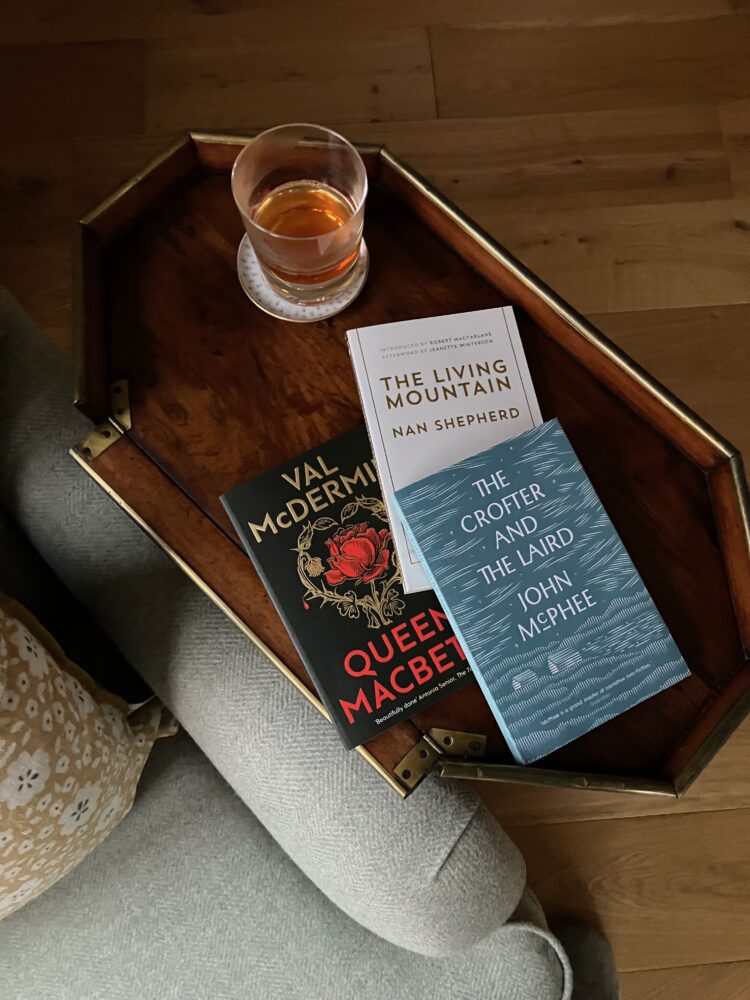
In my opinion these three short books seem to capture an essence of Scotland. They are not comprehensive histories or glossy introductions. Instead, they are precise, thoughtful, and quietly revelatory — much like Scotland itself.
Land, Power, and the Long Memory
The Laird and the Crofter — John McPhee (1970)
This slim but incisive book remains one of the clearest explanations of Highland land ownership I know. McPhee does not argue or editorialise. He observes — carefully and patiently — allowing the structures of power, inheritance, and control to reveal themselves through lived example.
What emerges is an understanding of why land in Scotland is never merely scenery. It is memory, identity, livelihood, and grievance — often simultaneously. The tensions McPhee describes are not historical curiosities; they continue to shape rural life, debates about access, and conversations around stewardship today.
If you want to understand why land remains such an emotionally charged subject in the Highlands, this is an excellent place to begin.
Landscape as Experience, Not Backdrop
The Living Mountain — Nan Shepherd (1977)
Nan Shepherd does not write about conquering mountains. She writes about knowing them.
Her reflections on the Cairngorms are built from years of immersion — walking, sitting, returning, paying attention. The result is a book that feels less like nature writing and more like a sustained conversation with place.
This is not a book to skim. It rewards slowness and rereading, mirroring the very relationship with landscape that Shepherd advocates. In an age of itineraries, summits, and checklists, The Living Mountain is a quiet corrective.
It aligns closely with how I believe travel works best in Scotland: unhurried, observant, and respectful of scale — both human and geological.
History, Power, and Who Gets to Be Remembered
Queen Macbeth — Val McDermid (2025)
History is not fixed, and Val McDermid’s Queen Macbeth is a powerful reminder of how narratives are shaped — and who is permitted to shape them.
By returning to Gruoch, the historical queen behind Shakespeare’s invention, McDermid dismantles centuries of simplification and distortion. What replaces the familiar caricature is a woman operating within the brutal political realities of 11th-century Scotland: dynastic conflict, fragile alliances, and survival in a world where power was rarely secure.
What makes this book particularly effective is its restraint. McDermid does not overwrite the past; she restores complexity to it. And the ending — without giving anything away — is both deeply satisfying and quietly unsettling. It lingers, not because of dramatic flourish, but because it resolves the story on human rather than theatrical terms.
It is a fitting reminder that history is something we continue to interrogate, not simply inherit.
Reading as a Way of Travelling
Taken together, these three books offer a useful framework for understanding Scotland:
- Land and power
- Landscape and perception
- History and narrative
They are short enough to read before a journey, and rich enough to continue working on you long afterwards. Like good guiding, they do not overwhelm with information; they invite reflection.
At Attaché Tours, we believe that travel is deepened by context. Reading — like travelling well — is another way of paying attention.
If you are planning a journey through Scotland, these books are excellent companions. They will not tell you where to go — but they may change how you see what is already in front of you.
Discover curated journeys through Scotland shaped by land, landscape, and story at
https://attache.tours